Personal Brand PR: How Coaches, Consultants, and Founders Get Media Coverage
Media coverage isn't just for companies with PR budgets. If you have a real point of view, a credible track record, and the right approach, you can get published in the outlets your ideal clients actually read — and let that coverage do the selling for you.
Vivek Sharma
13 min read
267 views
Key Takeaways
Personal brand PR is fundamentally different from corporate PR — it leads with a person's story, expertise, and POV, not a company announcement.
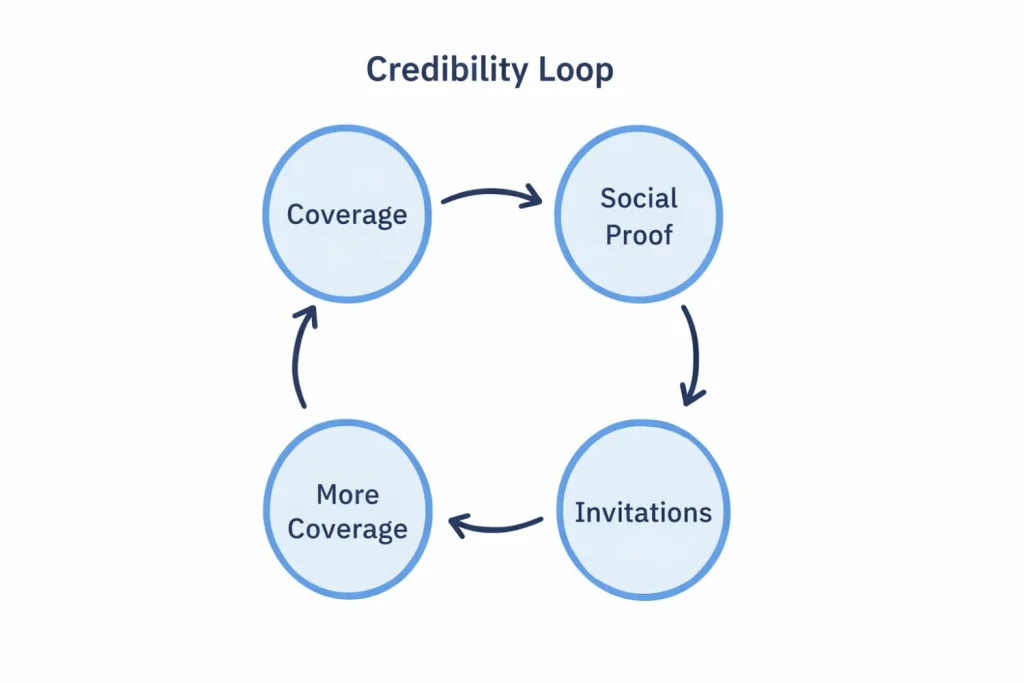
Media coverage compounds over time: one placement opens the door to the next in a "credibility loop."
The best publications for coaches and consultants include Forbes, Entrepreneur, Inc., Fast Company, Business Insider, and vertical-specific trade outlets.
Journalists want angles, not bios — story pitches should centre on a trend, insight, or contrarian take, not a career summary.
Guest posting is the most accessible entry point; digital PR scales reach and authority simultaneously.
TS Newswire offers editorial placements, guest posting, and digital PR specifically suited to individual brand builders.
Here is something most PR guides won't tell you upfront: the media landscape was not built with you in mind. It was built for companies, product launches, and corporate announcements. But over the last few years, something has shifted — and it is shifting fast.
More journalists, editors, and podcast hosts now actively seek out individual voices. They want a business coach with a sharp opinion on leadership. They want a consultant who can explain why a popular strategy is overrated. They want the founder who built something from zero and has receipts. That is you — if you know how to position yourself.
This guide is written for coaches, consultants, and personal brand builders who are tired of watching people with half their experience get featured in Forbes, Entrepreneur, and Business Insider. We are going to break down exactly why personal brand PR works differently from corporate PR, how the credibility loop operates, which outlets actually move the needle, and how to angle your story so journalists want to use it.
Why Personal Brand PR Is Different from Corporate PR
When a company hires a PR firm, the goal is typically to protect reputation, announce products, or manage crises. The press release is the workhorse. The spokesperson gets coached to say as little as possible while staying on message. Everything is filtered through a legal team before it goes out.
Personal brand PR flips this on its head. Your competitive advantage is not sounding like a press release. Your advantage is having a specific perspective, a track record you can speak to directly, and the ability to say something a corporate brand never could.
Think about why people follow coaches and consultants online in the first place. They are not looking for brand messaging. They want to hear from someone who has done the work, formed strong opinions from it, and can tell them something useful. That is exactly what a good journalist wants too.
"Reporters don't want your company's point of view. They want a human being with something worth saying."
This has practical implications for how you approach coverage. Corporate PR campaigns lead with news — a product launch, a funding round, a partnership. Personal brand PR leads with a narrative — a transformation you facilitated, a trend you saw before others did, a counterintuitive insight from your specific area of work.
There is also an important difference in what "success" looks like. A company might celebrate a mention in a major wire pickup. For a personal brand, the goal is something more specific: you want coverage in the publications your ideal clients are already reading, coverage that positions you as the obvious choice when they need what you offer.
One more distinction worth naming: authenticity is not optional in personal brand PR. Readers can tell when an "expert quote" was ghostwritten by a PR team with no real skin in the game. When your name is on something, it had better sound like you — specific, direct, and grounded in actual experience. That authenticity, done well, is what makes personal brand coverage so powerful. It does not just inform. It builds trust.
The Credibility Loop: How Media Coverage Compounds Over Time
One of the most underappreciated things about getting press coverage is how it works after it is published. Most people think about a placement as a one-time win — a screenshot for LinkedIn, a badge for the website. That is fine, but it is not the real value.
The real value is what it unlocks next.
Here is how the credibility loop typically works in practice. You secure your first guest post or feature — let's say a 900-word piece in a business publication with decent reach. You add the "As Seen In" logo to your website. A podcast host Googles you before deciding whether to invite you as a guest and sees the placement. They invite you. During that interview, you mention a few ideas that get picked up in a newsletter roundup. A journalist who writes for a larger outlet reads the roundup and adds you to their source list. Six months later, they quote you in a piece with 300,000 monthly readers.
None of that would have happened without the first placement. And none of it required you to pitch every step — the coverage did the work.
This is why the question of "does PR actually generate ROI?" is both valid and slightly misframed for personal brand builders. Direct ROI — a piece runs, three people book discovery calls — does happen. But the larger return is compounding authority. Every placement becomes evidence that other gatekeepers use to decide whether you are worth their platform.
There is also an increasingly important dimension here related to how AI systems surface expertise. When someone asks an AI assistant about leadership coaching, business strategy, or niche consulting topics, the models draw from indexed content around the web — including published articles, author bios, and media features. A personal brand with consistent coverage across reputable publications is more likely to be cited or referenced in AI-generated answers than a brand that only exists on its own website. This is not a far-future consideration. It is already happening.
Key Takeaway
Your first media placement is not just a win — it is infrastructure. Each piece you publish increases the probability that the next opportunity finds you, rather than the other way around.
Which Publications Matter Most for Coaches and Consultants
Not every publication will move the needle for you, and spending time chasing placements in outlets your ideal clients have never heard of is a real trap. The goal is strategic fit — publications that your target audience reads, trusts, and references when making purchasing decisions.
Newsletter
Stay in the Loop
Strategic insights on PR & digital communications, delivered weekly.
Broad Business Authority Publications
These carry the strongest brand signal for coaches, consultants, and founders building general business authority. A byline here works as a universal trust signal across audiences.
Forbes
Entrepreneur
Inc. Magazine
Fast Company
Business Insider
Harvard Business Review
Fortune
Forbes and Entrepreneur are particularly well-suited for personal brand work because they publish a large volume of contributor content. You do not need to be the CEO of a Fortune 500 company to get published there — you need to have something genuinely useful to say to a business audience. Fast Company and HBR carry more editorial weight and are harder to crack, but a placement in either carries significant authority signals with corporate buyers and professional audiences.
Niche Vertical Publications
If your coaching or consulting practice is focused on a specific industry — healthcare leadership, SaaS growth, executive career transitions, financial planning for entrepreneurs — the vertical trade publications in that space will often deliver better client-quality reach than a general business outlet.
A healthcare leadership consultant featured in Modern Healthcare will reach more relevant decision-makers than the same consultant featured in a general entrepreneurship blog with higher traffic. Specificity is an asset, not a limitation.
Podcasts as PR
Podcast appearances often get overlooked in the PR conversation, but for personal brand builders they are among the most effective placements available. A 45-minute conversation with a well-known host in your niche reaches a highly engaged audience, allows you to demonstrate thinking in real time, and generates content you can repurpose across every channel. Many of the most successful coaches and consultants built the bulk of their early authority through podcasts before any print publication featured them.
How to Angle Your Story for a Journalist
This is where most personal brand PR efforts fail. People spend weeks building their bio and zero hours thinking about what a journalist actually needs. Let's fix that.
A journalist's job is not to promote you. Their job is to serve their audience with interesting, useful, or timely information. Your job, in every pitch, is to make their job easier by connecting your expertise to something their readers care about right now.
The Four Angles That Work
1. The Trend Tie-In. Connect your expertise to something already in the news cycle. If there is a surge of conversation around executive burnout, AI replacing mid-level managers, or remote work policy reversals, you want to be the expert who can comment on the business coaching or consulting angle. Journalists need named sources. Be available, be specific, and respond quickly.
2. The Counterintuitive Take. This is one of the most powerful angles for consultants. "Why [popular belief in your field] is actually wrong — and what works instead" is a story structure journalists use constantly. If you have a contrarian view that is backed by experience and data, pitch it directly. Editors know their readers get bored of conventional wisdom.
3. The Data-Backed Insight. If you have worked with enough clients to have patterns — "across 40 executive coaching engagements, I have noticed that the top predictor of leadership failure is X, not Y" — that is a story. Original observations with numbers attached are genuinely hard for journalists to find. If you can offer that, you become a recurring source, not a one-off mention.
4. The Personal Pivot Story. A well-structured story about what you did, what failed, what you learned, and what you do now is perennially appealing to business publications. This is not about oversharing — it is about demonstrating the kind of specific, hard-won insight that only comes from doing the work. Publications like Entrepreneur and Inc. run this format regularly.
What to Avoid in Your Pitch
Long introductions about your background. Generic subject lines. Attachments on a cold email. Pitching without reading what the journalist actually covers. Ending with "I am happy to provide a quote if needed" — lead with the quote, not the offer.
Keep pitches short: three to five sentences on the angle, one or two on why you are the right person to cover it, and a direct ask. If you have previously published work to link to, include one link — not five.
For a more detailed comparison of how different content strategies support visibility, the breakdown on guest posts vs link insertions vs digital PR is worth reading before you decide which placement type fits your current goals.
What TS Newswire Delivers for Individual Brand Builders
Most PR services are built around companies, not people. The pitch decks reference client lists of brands, the packages are designed for product launches, and the metrics are about wire impressions — not whether the right 200 people saw your name in the right context.
TS Newswire works differently. A meaningful part of what we do is built specifically for the individual expert — the coach building a high-ticket programme, the consultant positioning for corporate engagements, the founder creating a thought leadership presence ahead of a board presentation or speaking circuit.
Here is what that looks like in practice.
Guest Post Placements
A guest post is a bylined article published in your name on a relevant publication. For personal brands, this is often the best starting point — it gives you a live, indexed piece of content that demonstrates your thinking, builds a backlink to your site, and creates the "As Seen In" entry that starts the credibility loop described earlier.
The placements we arrange are editorial, not advertorial. They read like real journalism because they are — which is what makes them useful as a trust signal rather than just a vanity metric.
Digital PR
Digital PR at the personal brand level means getting your name, story, or expert commentary placed in publications through editorial outreach. This is different from a press release distributed to a wire — wire distribution is useful for announcements, but it does not build the kind of earned media presence that compounds.
If you have been wondering whether your PR efforts are actually working, it is worth reading through why so many press releases underperform — the breakdown in why your press release failed covers the most common mistakes and how to avoid them.
Press Release Distribution With Purpose
When you have a genuine announcement — a book launch, a major speaking engagement, a new programme, a significant client win — a well-structured press release distributed through the right channels can seed coverage and build domain authority simultaneously. The key word is "genuine." A press release about nothing is digital clutter. A press release with a real hook, distributed strategically, can open editorial doors.
For a current view of which distribution channels actually work and which ones are largely noise, the 2026 press release distribution guide is a useful reference.
Start building your media presence today
Whether you are looking for your first guest post placement or a full personal brand PR strategy, TS Newswire works with coaches, consultants, and founders to get coverage that actually matters. No vanity metrics. No wire-only packages. Just the right placements in the right publications.
Start with a specific, timely angle — not a general biography. Pitch business or niche publications with a data-backed insight or contrarian take tied to your area of expertise. Guest posting on industry sites is often the fastest first step for consultants without existing media relationships. Over time, a pattern of placements builds a source profile that journalists find on their own.
Which publications are best for personal brand PR?
For broad business authority, Forbes, Entrepreneur, Inc., Fast Company, and Business Insider are the strongest signals. Harvard Business Review carries the most weight with corporate and academic audiences. For client-quality reach, niche vertical trade publications in your specific industry often outperform general business outlets — a healthcare coach in Modern Healthcare reaches more relevant buyers than a general startup blog with ten times the traffic.
What is the credibility loop in personal brand PR?
The credibility loop describes how one piece of media coverage makes it easier to get the next. Your first placement builds social proof, which helps you land podcast invitations, speaking gigs, and higher-tier media features — each one reinforcing the others. Over 6 to 12 months, this compounds into an authority signal that clients, journalists, and AI systems all recognise.
Is a press release useful for personal brand building?
Press releases alone rarely build a personal brand. They work best when paired with editorial placements — guest posts and digital PR that put your name and perspective in front of real audiences, not just wire pickup pages. A press release announcing a book launch or major programme, combined with a guest post on the same topic, is a stronger combination than either alone.
How long does it take to see results from personal brand PR?
Most coaches and consultants start seeing tangible results — inbound enquiries, speaking invitations, new follower growth — within 60 to 90 days of consistent placements. The compounding effect is most visible at the 6 to 12 month mark, when a pattern of coverage starts doing active inbound work on your behalf.
What is the difference between guest posting and digital PR for personal brands?
A guest post is a bylined article you write, published under your name on another site. It demonstrates your thinking, builds your bio, and creates a permanent indexed reference point. Digital PR is broader — it includes getting your commentary placed in news stories, securing interviews, and earning mentions in roundup features. Both build authority, but they do it in different ways and work best in combination. The full comparison here goes deeper if you want to understand each tactic in detail.

 Vivek Sharma
13 min read
267 views
Vivek Sharma
13 min read
267 views