


Quick answer
The link is now a byproduct. The citation is the goal. Journalists field 150+ pitches a week, so utility wins over volume.
Ranking-gap PR was the highest-ROI play: find a commercial page near page one, build a journalist-ready data asset, pitch the writers who already cover that beat.
Proprietary data and surveys earned the strongest links because they give reporters something they can't source anywhere else.
Expert response platforms like Featured and Connectively work when you respond fast, lead with a specific number, and target relevant outlets.
The link is only half the prize. Even an unlinked, plain-text mention teaches Google's entity systems who you're an authority on, and clean data assets earn citations inside AI Overviews, not just blue-link positions.
What stopped working: mass syndication as an authority play and paid link packages.
Measure differently: referring-domain quality, dofollow vs nofollow, topical relevance, referral traffic, branded-search lift, unlinked brand mentions, and target-page movement, not just how many links you collected.
There's a quiet truth most link-building guides won't admit: the tactics that filled spreadsheets in 2022 are actively burning budgets now. The brands seeing real movement this year aren't pitching harder. They're pitching differently.
We collected responses from agency founders, in-house leads, and operators running live campaigns, and asked a single question: what is digital PR actually doing for your backlinks and rankings right now? One theme showed up in nearly every answer. Digital PR stopped being a link-acquisition game and turned into a citation game. The goal is no longer to extract a link. It's to become the source a journalist reaches for and an answer engine repeats.
Here's what that looks like in practice.
The Inbox Problem Nobody Talks About
Start with the constraint everyone is working against. Reporters are buried.
Daniel Grainger, a Digital PR Specialist at Ranking Atlas, put a number on it: journalists report receiving well over 150 pitches every single week. That's the wall every pitch hits. Generic outreach doesn't just underperform in that environment, it's invisible.
His response to the volume problem is to stop competing on volume and start competing on substance. "The tactic that we're applying at Ranking Atlas is investing in surveys," Grainger explained. The play is to fund real datasets that produce novel, factual insights about a client's audience, then become known as a reliable source for stories nobody else can tell. When the data is genuinely new, the pitch doesn't need to shout.
That reframe, fund the data instead of polishing the pitch, sits underneath every tactic that worked this year.
Tactic 1: Ranking-Gap PR
The single highest-ROI play in the responses was deceptively simple. Don't build a campaign around vague thought leadership. Build it around a page you're already close to ranking.
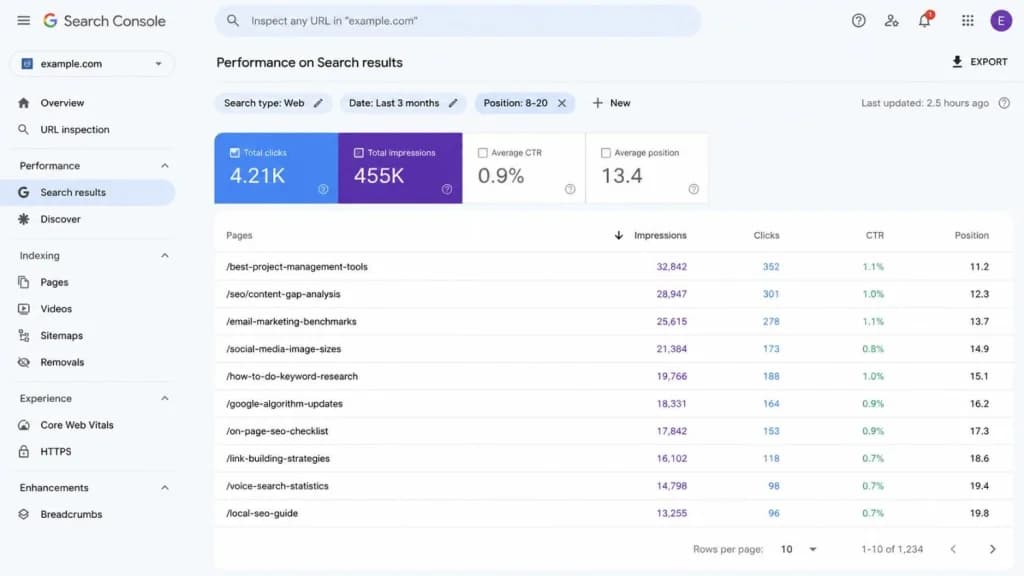
The mechanics: open Search Console, find a commercial page stuck just outside the top results, build a small journalist-friendly data asset that naturally supports that page's topic, then pitch the writers who already cover that beat. The link lands on a page that's primed to move, and the topical relevance is built in rather than forced.
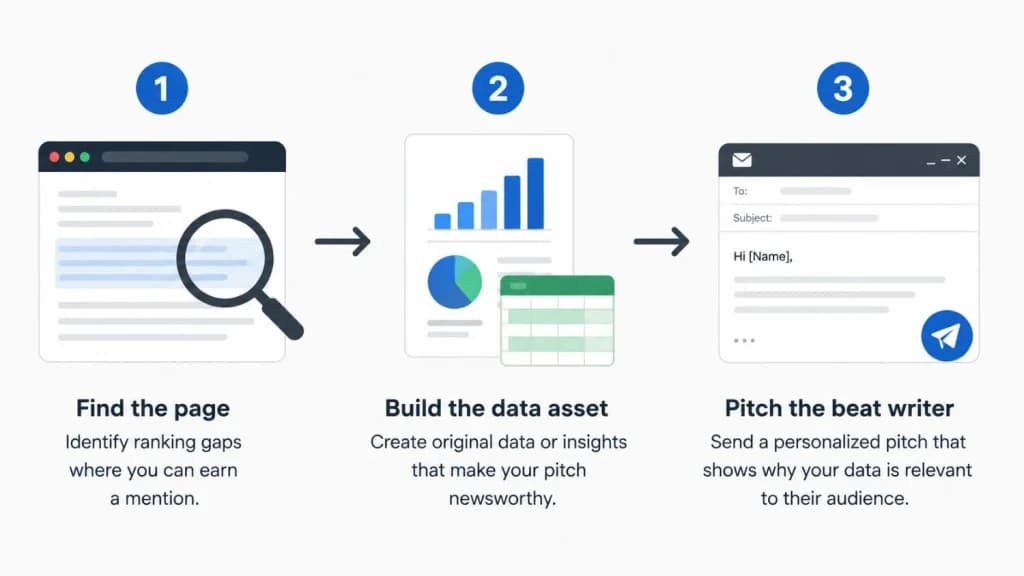
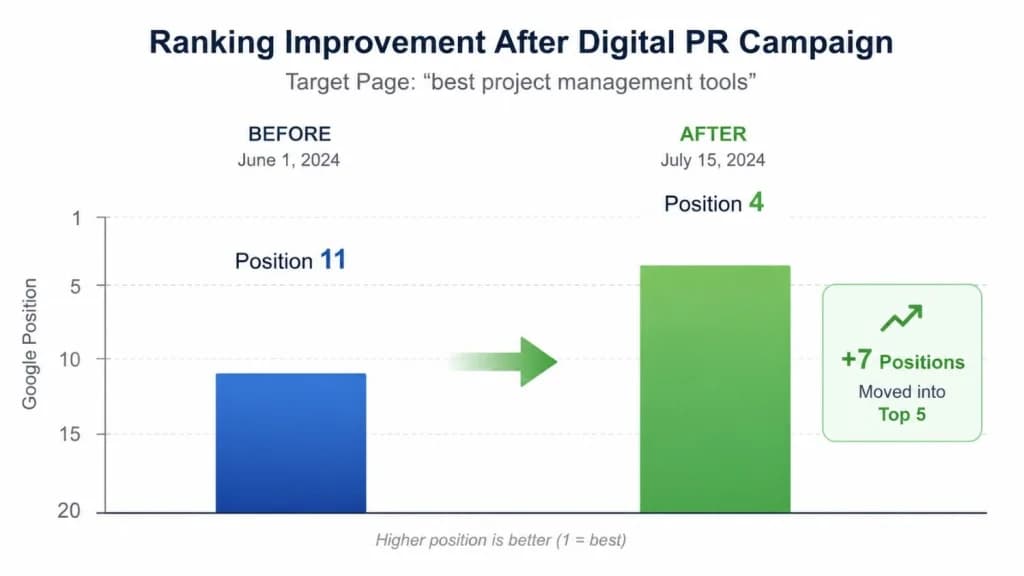
One finance campaign followed exactly this shape. The team pulled Search Console and Ahrefs data to find pages stuck in positions five through fifteen, then built a compact data story around lending trends using anonymized customer data paired with public figures. The result, as reported: roughly 22 links from relevant news and industry sites over about eight weeks, the target page climbing from position 11 to 4, and organic leads from that page rising about 34% the following quarter.
The lesson isn't the specific number. It's the sequence. Page first, asset second, outreach third. Most teams run it backwards, chase a link, then hope it helps something.

Tactic 2: Own Data Nobody Else Has
If there's a single dividing line between PR that earns links and PR that gets ignored, it's whether you're handing journalists something they can't get anywhere else.
Faiz Ahmed, Founder of GpuPerHour, built his entire approach around this. His team publishes quarterly reports on GPU marketplace trends with data no competitor has access to: average rental prices by model, utilization rates across workload types, peak demand windows, pricing trends over time. "A journalist writing about the cost of training large language models will cite our marketplace data because it gives their article credibility that speculation cannot provide," he said. One data study on H100 pricing earned links from over thirty publications within its first month, and those links kept driving referral traffic for months afterward.
The format doesn't have to be elaborate. Grainger's survey approach uses services like Pollfish or Centiment to stand up a dataset. Ahmed's uses internal platform data. What matters is that the number is real, defensible, and unavailable elsewhere. That's the currency.
Tactic 3: Connect Every Pitch to a Page
The teams getting the most out of PR aren't treating placements as scattered wins. They're treating each one as a vote for a specific page.
The discipline looks like this: every pitch is tied to one target page, supported by a handful of internal links, with anchor text you can earn naturally through the story itself. That keeps the earned link relevant instead of random, and it means a single research effort can feed multiple linkable assets on your own site, a quote-led article, a contributor answer, a statistics page. One research project, several destinations.
It's the same instinct as ranking-gap PR, extended into a system: don't let a hard-won editorial link point at your homepage and dissipate. Point it where it compounds.
Tactic 4: Expert Platforms, Done With Discipline
Expert response platforms, Featured, Connectively, and the HARO-style services that replaced the original, came up repeatedly. But the people getting results from them weren't spraying answers everywhere.
The pattern that worked: respond quickly, lead with a specific number or a named example, and only answer queries where your title and background make you the strongest possible source in the inbox. Volume helps because selection rates per pitch are low, but curation is what turns volume into placements. A single quote in a high-authority publication, earned because a journalist was actively looking for an expert, carries trust signals that no purchased link can replicate, and zero penalty risk.
The compounding effect matters too. Each placement makes the next pitch easier, because editors who look you up now find prior coverage. Credibility stacks.

What Stopped Working
Two tactics drew consistent skepticism.
The first is treating press release syndication as an authority play. Duplicate distribution can create noise and visibility, but on its own it rarely builds the kind of editorial authority that moves rankings. The value of distribution shows up when it lands real, indexed brand mentions on credible outlets, not when it simply multiplies the same release across low-quality endpoints.
The second is paying for link packages. Search engines have gotten precise at spotting unnatural patterns, and a single bad network can undo a year of legitimate work. The operators who'd been burned were blunt about it: the boring path, publish real data, answer real questions, get cited, compounds. Everything else is rented.
Measure PR Like It Matters
If you're still reporting digital PR by counting links, you're measuring the wrong thing. The practitioners getting buy-in had moved to a richer scorecard.
Brett Smith, Founder and CEO of 7aSavvy, tracks which pitches actually earn mentions, which publications drive referral traffic, impressions and clicks on the linked pages, and whether branded search rises after placements go live. He'd rather track a small number of high-quality links from credible articles than chase a pile of low-quality placements, and he uses Search Console to compare CTR, impressions, and average position per page and query over time. That's how you tell whether PR is lifting the site or just filling a report.
Lin Meyer, CEO of Crucial Exams, runs an even tighter operating system: select only the most relevant inquiries, respond fast, include exactly one specific example, and log every pitch, mention, link type, and ranking change in a spreadsheet. Track the authority of the linking domain, how closely the referenced content matches your topic, whether links are nofollow or dofollow, referral visits, and whether target pages actually moved.
The throughline: a link is only worth counting if you can connect it to relevance, traffic, or trust.
The Pattern Underneath All of It
Silvia Lupone, who runs Stingray Villa in Cozumel, described the shift more plainly than any framework could. After years of treating backlinks as a numbers game, she changed approach: tell true stories, share first-hand insight from her own bookings and local experience, and target writers who actually cover travel in Mexico rather than blasting mass emails.
The outcome wasn't more links. It was fewer, better ones, and the right guests finding her. "Being referenced because you provide value to someone writing an article, helping them write a better article, is where the backlinks begin to occur naturally," she said.
That's the whole game in 2026. Stop asking for links. Become the source worth citing, and the links follow.
If your on-page work is in shape and you need earned media to match it, the TS Newswire dashboard lists placement options with DA/DR scores, niche, pricing, and turnaround visible before you commit to anything.
FAQ
What is digital PR in 2026? Digital PR in 2026 is the practice of earning editorial mentions and citations from credible publications by giving journalists genuinely useful material, original data, expert commentary, or news-hooked insight, rather than requesting backlinks directly. The link has become a byproduct of being a citable source rather than the primary objective.
Does digital PR still help SEO rankings? Yes. Relevant editorial links and brand mentions from authoritative, topically aligned publications continue to support rankings and increasingly influence visibility inside AI-generated search answers. The shift is toward quality and topical relevance over raw link volume.
What is ranking-gap PR? Ranking-gap PR is a tactic where you identify a commercial page already sitting just outside the top search results, build a journalist-friendly data asset that naturally supports that page's topic, and pitch writers who already cover that beat. Because the link lands on a page primed to move and is topically relevant, it tends to produce faster, more measurable ranking gains.
Are press releases still worth it for backlinks? Press release distribution adds value when it earns real, indexed brand mentions on credible outlets and is paired with a clean site that can capture the link equity. On its own, duplicate mass syndication rarely builds the editorial authority that moves rankings, so it works best as part of a broader earned-media strategy.
Should you pay for link packages? No. Practitioners consistently warn against paid link networks because search engines have become highly accurate at detecting unnatural link patterns, and a single bad network can erase a year of legitimate work. Earned, contextual links from publications actively seeking expert sources carry no penalty risk.
How do you measure digital PR results beyond link count? Track the authority and topical relevance of referring domains, whether links are dofollow or nofollow, referral traffic from each placement, branded-search lift after coverage, and movement in target-page rankings and click-through rates using Search Console. A link only counts if it connects to relevance, traffic, or trust.
Distribute your next announcement with named outlets
One-time pricing, compliance review for regulated industries, and a publication report with live links you can verify.