
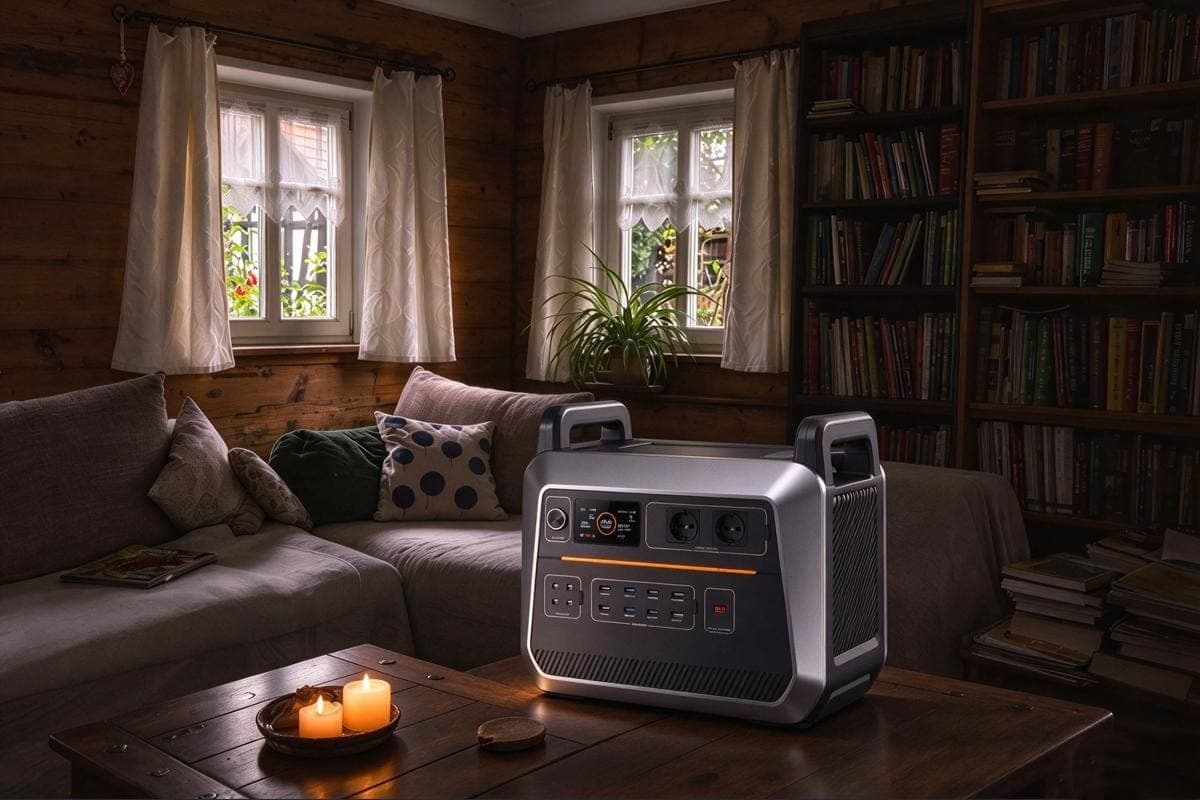
NEW YORK, NY, October 17, 2026: As extreme weather puts new strain on the U.S. power grid, communities are starting to treat backup power as a shared responsibility instead of a household task, according to PiForz, an energy storage manufacturer.
Flooded substations, wildfire-related line shutdowns and winter storms that cut generation across whole regions cause outages that can last days or weeks, not hours. During Winter Storm Uri in Texas in 2021, more than 4.5 million homes and businesses lost power, and some areas went without electricity for four days. When Hurricane Ian hit Florida in 2022, more than 2 million customers lost power, and restoration took nearly two weeks in some areas.
Why some outages last longer
PiForz points to four factors that decide how long restoration takes: whether damage is local or systemic, how scarce repair crews and parts are when hospitals and water plants take priority, local climate conditions such as preventive wildfire shutoffs, and the age of infrastructure, much of it built in the 1950s and 1960s.
Three community approaches
Community microgrids supply critical facilities from their own generation and storage when the main grid is down.
Community solar plus storage on schools, libraries and community centers lowers daily electricity costs and acts as an emergency power source during an outage.
Mutual aid networks record which households need power for medical equipment and which have generators or solar, so neighbors can help one another.
The role of battery storage
Battery storage lets solar power be used at night and on cloudy days, which makes independent operation possible. Compared with fuel generators, batteries are quiet, produce no emissions in operation, need no stored fuel and can be recharged with solar.
Kate Anderson, a senior engineer who manages the Engineering and Modeling Group at the National Renewable Energy Laboratory, has said that solar-plus-storage has traditionally been judged on cost and energy savings, while “resilience is emerging as another critical value.”
Battery capacity limits runtime. PiForz notes that a 10 kWh home battery can typically run a household’s essential loads, such as a refrigerator, lighting, communications equipment and medical devices, for roughly one to two days. Longer outages call for a larger battery, solar recharging or both.
A layered approach
PiForz recommends planning backup power in three layers: a basic plan at home that covers the first 72 hours, solar-plus-storage at key community buildings such as schools and shelters, and regional microgrids that reduce dependence on one large grid. “Hazel Li, Sales Specialist, PiForz”
About PiForz
PiForz is an energy storage specialist with 15 years of experience in the battery industry. It provides battery solutions from product development and manufacturing to OEM and ODM services, covering energy storage systems, portable power stations and customized energy solutions for global markets. PiForz is seeking global distributors and long-term strategic partners.